Is Elon Musk Autistic? The Surprising Truth You Need to Know
Introduction
You have probably heard Elon Musk say something that made you stop and think, “What does he actually mean by that?” His blunt communication, his laser-sharp focus on rockets and electric cars, and his sometimes awkward social moments have kept people guessing for years. But in 2021, Musk finally gave the world a concrete answer about something many had been quietly wondering.
Is Elon Musk autistic? The short answer is yes, at least according to Musk himself. He publicly disclosed that he has Asperger’s syndrome during his Saturday Night Live appearance, making it the first time he had spoken openly about being on the autism spectrum. That single moment sparked a global conversation about neurodiversity, what autism looks like in adults, and whether the traits that make someone “different” might also be the very traits that make them extraordinary.
In this article, you will get a clear, honest look at what Musk said, what the science says about autism and his observable traits, and why his disclosure matters far beyond celebrity gossip.
What Did Elon Musk Actually Say About Being Autistic?
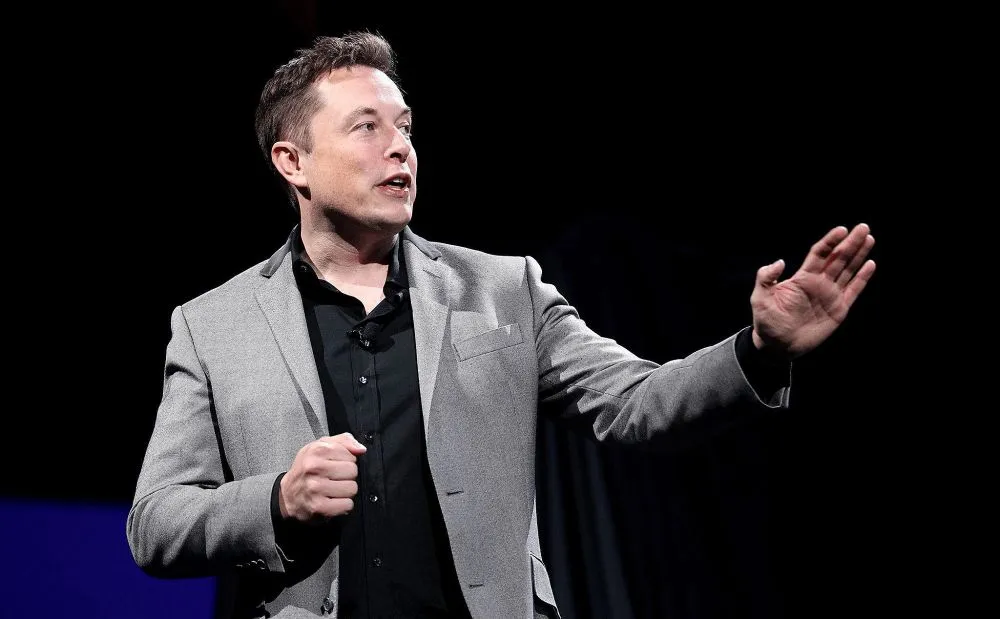
On May 8, 2021, Elon Musk hosted Saturday Night Live and dropped a quiet bombshell right at the start of his monologue. He told the audience he was “making history as the first person with Asperger’s to host SNL, or at least the first to admit it.” He also added that he sometimes says or posts strange things, but that is simply how his brain works.
It was a casually delivered statement, but the impact was anything but casual. Millions of people watched in real time as one of the world’s most powerful and recognizable figures placed himself openly on the autism spectrum.
A few things are worth noting here. First, Musk used the term Asperger’s syndrome rather than autism spectrum disorder. This distinction matters a little. Asperger’s was removed as a standalone diagnosis in 2013, when the DSM-5 merged it into the broader category of autism spectrum disorder. Many people still use the Asperger’s label out of familiarity, and Musk is clearly one of them.
Second, this was a self-disclosed diagnosis. Musk has never shared formal clinical documentation, and the medical community rightly points out that only a qualified professional can make an official diagnosis. Still, his words were clear and deliberate. He was not joking. He was not walking it back. He was simply stating a fact about himself.
Understanding Asperger’s and Where It Fits on the Autism Spectrum
Before we go deeper into Musk’s traits, it helps to understand what autism spectrum disorder actually is and where Asperger’s fits into the picture.
Autism spectrum disorder is a neurodevelopmental condition that affects how people communicate, interact with others, and process information. The word “spectrum” is key here. Autism does not look the same in every person. Some individuals need significant daily support. Others live entirely independently, hold demanding careers, and form deep relationships. The differences can be enormous.
Asperger’s syndrome, historically, referred to individuals on the spectrum who had strong verbal and intellectual abilities but struggled with social communication and often had intense, specific interests. People with this profile were sometimes described as “high-functioning,” though that term is now considered limiting and even a little reductive.
Key traits that fall under the autism spectrum include:
- Difficulty reading social cues or understanding unspoken rules of conversation
- A preference for direct, literal communication
- Deep focus on specific interests or subjects
- Repetitive behaviors or a strong preference for routine
- Sensory sensitivities to things like sound, light, or texture
When you look at that list and then look at Elon Musk, certain things start to connect.
Observable Traits in Elon Musk That Align With Autism
Now, it is important to be clear: identifying traits in a public figure is not the same as diagnosing them. What we can do is look at what Musk has said about himself and what observers have consistently noted over the years.
His Hyperfocus on Specific Interests
One of the most recognizable traits associated with autism is an intense, sustained focus on a narrow set of topics. Musk has demonstrated this in a way that is almost impossible to ignore. His obsessions include electric vehicles, space exploration, artificial intelligence, and renewable energy. He does not dabble in these areas. He goes all in, building companies around each of them and working at a pace that leaves most people breathless.
This kind of hyperfocus is genuinely common among autistic individuals. The brain locks on to a subject and processes it with a depth and persistence that neurotypical people often struggle to match. It is not a quirk. It is a cognitive style, and for Musk, it appears to have been enormously productive.
His Challenges With Social Communication
Musk himself has talked about struggling with small talk and social nuances. He has said he sometimes has to clarify “I mean that” after statements, because people assume he is being ironic or metaphorical when he is actually being completely literal. This is a genuinely recognizable experience for many people on the spectrum.
His public persona also shows a bluntness that can read as abrasive or socially tone-deaf. His tweets and statements are often startlingly direct, without the softening that most people apply instinctively in public communication. Whether this is autism-related or simply his personality is something only he truly knows. But he has connected it explicitly to how his brain works.
Pattern-Based and Analytical Thinking
People who study neurodiversity often point to pattern-based thinking as a signature strength of many autistic individuals. Musk’s approach to problem-solving reflects this. He is famous for “first principles” thinking, which involves stripping a problem down to its most basic components and rebuilding it logically from scratch. This is not typical business thinking. It is the kind of thinking that produces reusable rockets when the rest of the industry had accepted single-use ones as the standard.
Researchers and clinicians who study autism have noted that many autistic individuals share this analytical, systems-level way of approaching the world. Musk’s public problem-solving style fits that pattern closely.
Directness Over Social Norms
Musk has a well-documented habit of saying exactly what he thinks, even when social convention would suggest a softer approach. He has publicly argued with critics, made controversial statements without apparent awareness of the fallout, and engaged in debates in ways that many neurotypical observers find puzzling. For autistic people, prioritizing clarity and truth over social comfort is a very familiar experience.
What His Disclosure Meant for the Autism Community
When Musk revealed his diagnosis on SNL, the response was genuinely mixed. On one hand, many people celebrated the visibility. A billionaire, a builder, a person reshaping multiple industries had just told the world he is autistic. That matters. Representation matters. Seeing someone with autism at the top of any field sends a message to autistic kids and adults everywhere.
Traffic to autism awareness organizations increased significantly after his announcement. Conversations about adult diagnosis, late identification, and neurodiversity spiked across social media and search engines. For many families, it was a prompt to learn more, ask questions, and consider whether autism might explain experiences they had not yet understood.
On the other hand, some members of the autism community raised legitimate concerns. Musk’s experience of autism is not representative of most autistic people. He is a white male billionaire with enormous resources and a specific profile of traits that allowed him to accumulate power and wealth. The vast majority of autistic people face significant challenges with employment, housing, and access to support. In fact, studies have shown that fewer than one in four autistic adults are in paid employment.
Using Musk as the poster child for autism risks painting an incomplete and even misleading picture. It can reinforce the “savant” stereotype, where autism is acceptable or even celebrated only when it produces genius-level output. Autism does not come with a guarantee of brilliance. It comes with a different way of experiencing the world, and that deserves support and respect regardless of what a person produces.

Other Successful Figures Who Have Spoken About Being on the Spectrum
Musk is far from alone in his disclosure. Several other well-known figures have spoken openly about being autistic or having Asperger’s.
Temple Grandin, the renowned animal behaviorist and autism advocate, has been one of the most visible autistic voices for decades. She has written extensively about how her autism shaped her career and her extraordinary ability to understand animal behavior.
Anthony Hopkins, the acclaimed actor, revealed in 2017 that he had been diagnosed with Asperger’s syndrome as an adult. He has spoken about how the condition influenced his intense preparation for roles and his somewhat solitary working style.
These figures, like Musk, show that autism presents in a wide range of ways and does not prevent people from living full, accomplished lives. But they also show that public disclosure is still relatively rare, which makes each one meaningful.
Why Adult Autism Diagnoses Are More Common Than You Might Think
You might assume autism is something that gets identified in early childhood. And often it is. But a significant number of people reach adulthood without ever receiving a formal diagnosis. This is especially common among people who developed strong coping strategies early on, or who grew up before autism was well understood by clinicians.
Musk, born in 1971, grew up in an era when autism diagnoses were far less common and far less nuanced. What we now recognize as a broad spectrum was often missed entirely in children who were clearly intelligent and verbally capable.
Today, adult autism diagnoses are becoming more frequent as awareness grows and diagnostic criteria improve. Many adults seek evaluation after a child in their family receives a diagnosis and they begin to recognize similar traits in themselves. Others simply reach a point in life where understanding their neurology feels important.
This growing awareness is genuinely positive. It helps people access support, understand their own behavior, and stop blaming themselves for struggles that have a neurological basis.
The Controversy Around Musk and the Autism Community
It would not be honest to write this article without addressing the more complicated parts of the conversation. Some people within the autism advocacy community have questioned whether Musk’s public association with autism helps or hurts the broader cause.
There are a few specific concerns worth understanding. First, Musk’s Neuralink venture has at various points been described as a way to “solve” conditions like autism, a framing that many autistic people find deeply offensive. Autism is not a disease to be cured. It is a neurological difference. The idea that brain implants could or should fix autism reflects a medical model that the neurodiversity movement has been working hard to move past.
Second, Musk’s overall public behavior has at times made it harder, not easier, for autistic people to be taken seriously. When his impulsive statements or controversial decisions are explained away with “he’s autistic,” it reinforces the idea that autism excuses poor judgment or harms. Autism is not a free pass, and most autistic people would prefer not to have their diagnosis used as a catchall explanation for a billionaire’s behavior.
These are real tensions. Holding them honestly is part of having a thoughtful conversation about what Musk’s disclosure actually means.
What Elon Musk’s Story Tells Us About Neurodiversity
Here is what I think is the most important takeaway from all of this. Elon Musk’s story does not tell us that autism leads to success. It tells us that autistic people are everywhere, including in places we did not expect to find them.
Neurodiversity as a concept asks us to understand that brains develop differently, and that those differences are natural variations, not defects. Some autistic traits, like hyperfocus, pattern recognition, and directness, are assets in the right context. Others, like social communication challenges or sensory sensitivities, can make daily life genuinely hard.
The goal is not to celebrate autism only when it produces a Musk or a Grandin. The goal is to build a world where autistic people at every point on the spectrum are supported, understood, and valued. That means better access to diagnosis. Better workplace accommodations. More honest public conversation. And far less pressure on autistic individuals to mask their neurology to fit in.
Musk’s 2021 disclosure moved that conversation forward in some ways. It also complicated it in others. Both things can be true.
Conclusion
So, is Elon Musk autistic? Yes, based on his own public statement, he is on the autism spectrum. He disclosed a diagnosis of Asperger’s syndrome, which today falls under the broader category of autism spectrum disorder. He has pointed to several of his own traits, including difficulty with small talk, literal communication, and a brain that works differently, as being connected to that diagnosis.
His disclosure sparked genuine conversations about neurodiversity, adult diagnosis, and what autism looks like beyond the stereotypes. It brought new attention to the spectrum and, for many people, made autism feel more visible in everyday life.
At the same time, his story is not every autistic person’s story. Most people on the spectrum do not have his resources, his platform, or his particular combination of traits. What they do share is a brain that works differently and a world that is still learning how to make room for that.
Whether you are autistic yourself, love someone who is, or simply want to understand this conversation better, the most important thing is to keep asking questions and keep listening to the full range of autistic voices, not just the loudest or most famous ones.
What are your thoughts? Do you think public figures disclosing their autism diagnoses helps or complicates public understanding of the spectrum? Share this article and start the conversation.
Frequently Asked Questions
1. Is Elon Musk officially diagnosed with autism? Musk has publicly stated he has Asperger’s syndrome, which is part of the autism spectrum. He made this disclosure during his SNL appearance in 2021. He has not shared formal clinical records, so it remains a self-reported diagnosis.
2. What is the difference between Asperger’s and autism? Asperger’s syndrome was once a separate diagnosis but was merged into autism spectrum disorder in 2013. People historically diagnosed with Asperger’s tend to have average or above-average intelligence and fewer language delays, but still experience social communication challenges.
3. What autistic traits does Elon Musk show? Musk has mentioned struggling with small talk, taking things literally, and saying or posting things that confuse people. Observers also point to his intense hyperfocus on specific topics and his direct, blunt communication style as traits consistent with autism.
4. Did Musk say he was the first autistic SNL host? Yes, he claimed to be the first person with Asperger’s to host SNL. However, former cast member Dan Aykroyd, who also has Asperger’s, actually hosted the show back in 2003. Aykroyd had spoken about his diagnosis for nearly two decades before Musk’s disclosure.
5. What did the autism community think of Musk’s disclosure? Reactions were mixed. Many people celebrated the visibility and the awareness it brought. Others raised concerns that Musk’s profile does not represent most autistic people and that his association with autism risked reinforcing stereotypes.
6. Can adults be diagnosed with autism? Absolutely. Many people are diagnosed with autism as adults, particularly those who developed strong coping strategies in childhood or grew up before autism was widely understood. Adult diagnoses are becoming more common as awareness and diagnostic tools improve.
7. Does autism explain Musk’s behavior and decisions? Autism is part of who Musk is, but it does not explain or excuse everything about his behavior. Autism affects communication and social processing. Many of his business decisions, controversies, and statements are separate from his neurological profile.
8. Are other famous people autistic? Yes. Temple Grandin and Anthony Hopkins are among the well-known figures who have openly discussed being on the autism spectrum. Many more have not disclosed publicly.
9. Does Musk’s Neuralink aim to cure autism? Musk has at times described Neuralink’s potential to address conditions including autism, which drew significant criticism from autism advocates. Many in the autistic community do not want a cure and consider autism a neurological difference, not a disorder to be fixed.
10. What is the main lesson from Musk’s autism disclosure? The biggest takeaway is that autism exists across all walks of life, including in people who have reached the highest levels of professional success. It is a reminder that neurological diversity is real, widespread, and worth taking seriously in how we structure education, workplaces, and society.