Hermine Poitou: The Quiet Artist Who Lets Her Work Do All the Talking
In a world where fame seems to be the ultimate goal, where social media follower counts define success and celebrity connections are currency, Hermine Poitou stands as a refreshing contradiction. She is a French graphic designer, illustrator, and creative professional who has spent over two decades building a meaningful career — quietly, deliberately, and entirely on her own terms. While many people first encounter her name through her marriage to acclaimed British actor David Thewlis, those who look a little closer discover something far more compelling: a woman of profound artistic conviction, disciplined creative vision, and an almost radical commitment to privacy that feels both countercultural and deeply inspiring. Hermine Poitou is not trying to be famous. She never was. And that, perhaps more than anything else, is what makes her story worth telling.
The Woman Behind the Name
Before the world attached Hermine Poitou’s name to a famous face, she was simply a young French woman with an extraordinary eye for design and a passion for visual storytelling. Born in France, Hermine grew up in an environment steeped in the kind of cultural richness that only a French upbringing can offer — an appreciation for aesthetic beauty, philosophical depth, and artistic integrity that would later become the very foundation of her professional life.
Details about her childhood and family background remain private by design. Hermine has never opened the doors of her personal history to public scrutiny, and that boundary deserves to be respected. What we do know, however, is that her love for art and visual expression emerged early and stayed consistent. From a young age, she was drawn to design — not just as a hobby, but as a calling. She saw the world in lines, compositions, and color relationships, and she devoted her formative years to developing that vision into something disciplined and powerful.
Her educational journey reflects both ambition and a genuine hunger to master her craft across different traditions. She began her formal studies at Aix-Marseille University in France, where she earned a DEUG in Arts Plastiques — a foundational degree in plastic arts that gave her a grounding in the theoretical and historical language of visual culture. From there, she expanded her training at Newcastle College of Art & Design between 1990 and 1992, immersing herself in the British art education tradition, which tends to favor conceptual rigor alongside technical skill. Finally, she completed her education at the prestigious Camberwell College of Arts in London, one of the United Kingdom’s most respected creative institutions, earning Joint Honours in Graphic Design and Fine Arts. This combination — theory, concept, and applied craft — shaped the kind of designer Hermine would become: one who never separates function from beauty.
Building a Career in the Creative World
After graduating from Camberwell in the mid-1990s, Hermine’s career began in the bustling world of advertising and visual media, where she quickly built a reputation for her clean, thoughtful designs. From 1997 to 1998, she worked as a graphic designer and illustrator at Textuel, a communications agency, where she helped develop campaigns that were both artistic and commercially effective.
This early period was enormously important. Working at a communications agency meant learning to balance creative vision with client expectations — a skill that separates the good designers from the great ones. Hermine had to learn how to communicate ideas clearly, work within constraints, and deliver results that were both visually compelling and strategically effective. She did all of this while developing a personal aesthetic language that was already beginning to distinguish her from her peers.
Her talents were recognized, and she later worked as an art director at BDDP & TBWA Interactive between 1998 and 2000, managing digital and print design projects for notable brands. This role represented a significant leap — from executing designs to directing the visual identity of entire projects. As an art director, Hermine was responsible for the overall look and feel of campaigns, ensuring that every visual element served a unified creative purpose. It was demanding, high-responsibility work, and it confirmed that she had the judgment and leadership instincts of someone built for creative leadership.
Then, in the year 2000, she made a decision that would define the rest of her career. She made a bold move by shifting to freelance work, a decision that allowed her greater creative freedom and flexibility. Since then, she has taken on a variety of projects across publishing, advertising, and independent art, always bringing her signature style to each. Freelancing in a competitive creative industry is not for the faint-hearted. It requires relentless self-motivation, a strong professional network, and enough confidence in your own abilities to turn down projects that don’t align with your values. Hermine had all three.
Reports suggest that Hermine Poitou has worked in the creative industry for more than twenty years. That is a long time in any career, and it shows how passionate she is about art and design. Over the course of those decades, she has contributed to branding, editorial illustration, visual identity design, and more — often for clients who value discretion as much as she does.
A Touch of Cinema: Behind the Scenes in Film
Beyond the world of graphic design, Hermine also made quiet but meaningful contributions to the European film industry. Besides design and illustration, Hermine Poitou has also worked behind the scenes in the entertainment industry. Her work has included roles in casting and creative departments for film projects. For example, she was part of the casting team for the film Russian Dolls (2005). She also worked on another project called A Child’s Secret (2006).
These film credits, modest as they may seem to outsiders, speak to the breadth of Hermine’s creative engagement. Casting work requires an intuitive understanding of character, narrative, and human psychology — qualities that are not entirely different from those needed to design compelling visual communications. Hermine moved fluidly between disciplines, always guided by the same artistic instincts.
One of the most intriguing aspects of Hermine Poitou’s story is the possibility of influence without attribution. As a designer, casting professional, and creative partner, her impact may be felt in projects where her name is not prominently displayed. This is, in many ways, the purest form of creative contribution — work done for the love of the work itself, without any need for recognition.
Artistic Philosophy: Minimalism as a Statement
To understand Hermine Poitou’s work is to understand her values. At the heart of her artistic vision is a belief in balance, clarity, and quiet expression. Her design style leans heavily on minimalist techniques, favoring strong lines, muted color palettes, and clean layouts that evoke calm and sophistication. Influenced by both French elegance and British modernism, her work resists trends and instead reflects a timeless approach. She values form and function equally, creating pieces that are as purposeful as they are visually appealing.
In an era where digital design often defaults to noise — more colors, more animation, more effects — Hermine’s commitment to restraint feels almost revolutionary. Her minimalist aesthetic draws from a rich tradition that includes French modernism, Swiss typographic design, and the British editorial tradition, weaving them into something distinctly her own. She doesn’t chase what’s fashionable. She builds what endures.
Her personal philosophy extends beyond design and into how she lives. Hermine believes that creativity doesn’t require constant validation from others — it thrives in solitude, reflection, and honest expression. She has never chased fame or accolades, choosing instead to let her work speak for itself. This is not timidity. It is confidence of the deepest kind — the kind that doesn’t need applause to feel real.

Love, Partnership, and a Quiet Life Together
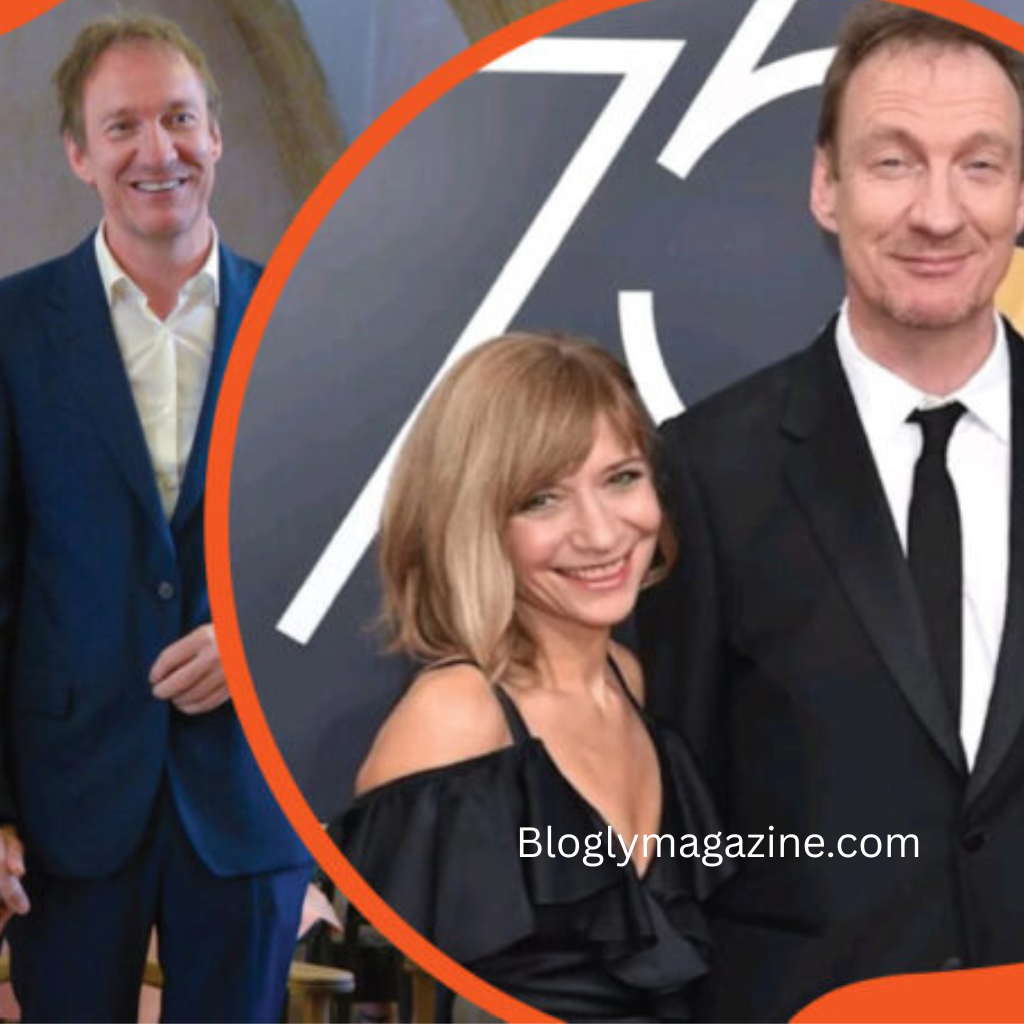
In 2016, Hermine Poitou and British actor David Thewlis — widely recognized for his iconic portrayal of Professor Remus Lupin in the Harry Potter film series — married in a private ceremony. The marriage was confirmed after the couple appeared together at public events, including the BAFTA TV Awards, where they were photographed together.
Hermine Poitou and David Thewlis have shared a private, loving relationship for over a decade. The couple maintains a low-profile life, choosing to enjoy their relationship without constant media attention. David has often spoken about Hermine as a patient and supportive partner, highlighting her role during times of creative or personal endeavor. He credits her with providing stability and encouragement, particularly while he was working on his second novel.
Hermine Poitou does not have any publicly known children. David Thewlis has a daughter named Gracie from a previous relationship with actress Anna Friel. Hermine is known to share a respectful and supportive relationship with David’s daughter. The family lives quietly in Sunningdale, Berkshire — a choice that speaks volumes about their shared priorities. They could choose the glamour of central London or the high-profile celebrity circuit. Instead, they chose peace, normalcy, and each other.
What stands out about their marriage is how they have maintained separate creative identities. Many actor spouses use that connection for recognition, but Poitou continues her artistic path without using her husband’s celebrity. This independence is not just admirable — it is rare. In a media landscape where celebrity adjacency has become a career strategy for many, Hermine has consistently refused to leverage the spotlight that could have easily been hers.
Net Worth and Financial Independence
Hermine Poitou has built up an estimated net worth of $800,000, all through her own work as a freelance graphic designer and illustrator. None of this comes from her husband’s acting career — it’s her projects, her clients, her hustle.
When combined with her husband’s successful acting career — David Thewlis has an estimated net worth of around $5 million to $8 million — the couple enjoys financial stability and comfort. But what matters here is not the combined figure. What matters is that Hermine’s financial standing is entirely the product of her own talent, discipline, and professional longevity. She built it herself, project by project, year by year, across more than two decades of consistent creative work.
Freelancing means she works with all kinds of clients, from one-off jobs to longer gigs. Her income comes from a variety of design and illustration projects. It’s not the steadiest way to make a living, for sure. One month might be busy, the next could be slow. But she’s managed to make it work and keep her business going strong. What really stands out is that she’s stayed financially independent.
This financial story is, in its own way, a powerful statement about creative entrepreneurship. It shows that sustained, quality work — even without personal branding or social media presence — can build a genuinely solid and independent livelihood over time.
A Life Without Social Media — and Why That Matters
Hermine Poitou does not have any publicly known accounts on Instagram, Facebook, X (Twitter), or other social platforms. This further shows her desire to live a quiet life away from public attention.
In the current era, this is genuinely extraordinary. For a professional in the visual arts and design industry — a world where Instagram portfolios can make careers overnight — the decision to remain entirely off social media is not just unusual. It’s a philosophical stance. While most designers post their work everywhere, she’s chosen to stay offline. That keeps her personal life safe, but it does mean less exposure for her art. Poitou’s approach really raises the question of how creative people can protect their private lives when everything feels so public now.
Her absence from digital platforms has not diminished her career. If anything, it has made her work more authentic — created for its own sake, not for the metrics. For younger creatives drowning in the pressure to build personal brands and generate content, Hermine Poitou’s example is a quietly radical reminder that another path exists.
Legacy in Progress: What Hermine Poitou Represents
Hermine Poitou’s biography is defined less by what is publicly documented and more by the consistency of her choices. She has built a life connected to creativity, collaboration, and intellectual engagement while maintaining firm boundaries around her personal identity. In a digital landscape that often rewards exposure over substance, her story offers a quiet counterexample. It shows that it is still possible to participate meaningfully in cultural and creative life without becoming a public commodity.
As of 2026, Hermine Poitou continues her freelance design work, living quietly in Sunningdale with David Thewlis, occasionally appearing at select cultural and film events, and contributing to creative projects that reflect her deeply held artistic values. She shows no signs of seeking public attention, and why would she? She has everything she values: meaningful work, a loving partnership, financial independence, and the freedom to create on her own terms.
This has made her a quiet role model in the design community, especially for women who seek to build meaningful careers without compromising their values. For a generation of creative professionals navigating the relentless pressure to be seen, Hermine’s story offers something rare and valuable — permission to go quietly, to work deeply, and to trust that the work itself is enough.
Conclusion: The Art of Living Authentically
Some people build legacies through volume — through headlines, viral moments, and carefully curated public images. Hermine Poitou is not one of those people, and that is precisely what makes her legacy so enduring. She built hers through consistency, integrity, and a refusal to compromise her vision for the sake of visibility.
Her journey — from the art schools of Aix-Marseille and Newcastle to the advertising agencies of Paris and London, and finally into more than two decades of independent creative work — is a story about what it means to take your talent seriously. It’s about the quiet courage required to say no to noise, to choose depth over reach, and to let the work carry the weight of your reputation.
As Hermine Poitou continues to create, collaborate, and carve her own path through the creative world, her story stands as a reminder that resilience and purpose can shape a meaningful legacy — one that doesn’t need a spotlight to shine. In a world that constantly shouts for attention, her silence is its own kind of masterpiece.