
Charity Hallett: The Unseen Anchor of the Greatest Showman
Before the roaring crowds, before the exotic curiosities, and before the name Barnum became synonymous with spectacle, there was a young woman in a quiet Connecticut town who chose love over logic. She chose a boy with empty pockets but a head full of dreams. While history remembers P. T. Barnum as the man who brought joy to millions, few remember the woman who brought stability to the man. Her name was Charity Hallett, and her story is not one of spotlights and applause, but of needle and thread, patience and resilience. In a world that celebrated the loudest voice in the room, Charity spoke through quiet action. She was a tailoress, a mother, a widow of the heart long before death, and the unsung hero of one of America’s most famous families. This is the story of the woman who held the greatest showman together.
| Quick Facts | Details |
|---|---|
| Full Name | Charity Hallett |
| Nickname | Chairy |
| Date of Birth | October 28, 1808 |
| Place of Birth | Bethel, Connecticut, USA |
| Date of Death | November 19, 1873 |
| Age at Death | 65 |
| Profession | Tailoress, Homemaker |
| Famous For | First wife of P. T. Barnum |
| Parents | Benjamin Wright Hallet & Hannah Sturges |
| Siblings | Six sisters, one brother |
| Spouse | Phineas Taylor Barnum (m. 1829–1873) |
| Children | Caroline, Helen, Frances (died young), Pauline |
| Net Worth | Modest personal estate; husband worth ~$4 million at death |
| Social Media | None (historical figure) |
Early Life: The Making of a Patient Soul
Charity Hallett was born into a world that moved at the pace of seasons, not seconds. The year was 1808, and Bethel, Connecticut, was a small farming community where reputation was measured in handshakes and hard work. Her father, Benjamin Wright Hallet, and her mother, Hannah Sturges, raised their children with a strict sense of duty. Charity grew up surrounded by the hum of spinning wheels and the scent of fresh linen. She was one of many children—six sisters and one brother—which meant that privacy was a luxury and cooperation was a necessity. In such a crowded household, Charity learned early that patience was not just a virtue; it was a survival skill.
Life in early 19th-century New England was demanding. Girls were expected to master domestic crafts, and Charity found her calling in sewing. She became a skilled tailoress, a profession that required steady hands and an even steadier mind. Unlike farming, which had its seasons, sewing was year-round work. It was a trade that allowed a woman to earn her own money, maintain her dignity, and contribute to her family’s survival. Charity was not born into wealth. She was born into practicality. She learned the value of a dollar because she had to stitch and mend for every single one. This upbringing would later become the invisible foundation upon which Barnum’s empire was built.
A Risky Romance: Marrying the Dreamer
In her late teens, Charity met a young man who was everything her family warned her against. Phineas Taylor Barnum was not a farmer. He was not a shopkeeper. He was a lottery salesman, a promoter, and a dreamer with a restless energy that did not fit the quiet rhythms of Bethel. He had charm in abundance but little in the way of steady income. To Charity’s mother, Hannah, Barnum was a walking red flag. She did not approve of the match. She saw a young man who would drag her hardworking daughter into poverty and disappointment.
But Charity saw something else. Where others saw recklessness, she saw ambition. Where others saw instability, she saw possibility. She was not blind to his flaws, but she believed in his potential. The two began a quiet courtship, exchanging letters and stolen moments away from disapproving eyes. Love, in those days, was a practical calculation as much as an emotional one. Charity calculated the risk and decided it was worth taking.
On November 18, 1829, Charity made her move. She and Barnum eloped to New York City. She was twenty-one. He was nineteen. It was not a glamorous wedding. There were no white dresses or flower-covered arches. It was a quiet, practical union between a tailoress and a dreamer. Mrs. Hallett was furious, but the deed was done. Charity Hallett became Charity Barnum, and her life of quiet endurance officially began.
The Poverty Years: When Needles Paid the Bills
The first decade of the Barnum marriage was not the stuff of legend. It was, by most accounts, a financial nightmare. The young couple moved to New York City, where Barnum tried his hand at various schemes. He opened a grocery store, ran a lottery, and dabbled in real estate. Nothing stuck. At one point, he was swindled by a business partner and left with almost nothing. The Barnums lived above a greengrocer’s shop, surrounded by the smell of rotting vegetables and the sound of their own empty stomachs.
This was Charity’s time to shine, though no one wrote about it in the newspapers. While Barnum chased opportunities and often came home empty-handed, Charity picked up her needle. She worked as a tailoress, taking in mending and sewing from neighbors and local shops. She made shirts, repaired trousers, and altered dresses. Her hands were never still. The money she earned was modest, but it was reliable. It bought bread, paid rent, and kept the family from falling into complete destitution.
Charity never complained. That was perhaps her most remarkable quality. She had married a man who promised her adventure, and adventure, she learned, often came with a side of hunger. Instead of growing bitter, she grew tough. She managed the household with military precision, stretching every dollar until it screamed. She bore children during these hard years and raised them in cramped apartments. While Barnum dreamed of museums and giants, Charity dreamed of a full pantry and a quiet evening. Her practical intelligence was the safety net that caught them every time Barnum fell.
Motherhood and Heartbreak
Charity gave birth to four daughters who survived. Their names were Caroline Cornelia, Helen Maria, Frances Irena, and Pauline Taylor. Each child was a new reason to keep going, a new mouth to feed, and a new source of joy in an otherwise uncertain life. Charity threw herself into motherhood with the same dedication she gave to her sewing. She was not a distant parent. She was hands-on, present, and deeply invested in her children’s well-being.
But the 19th century was cruel to parents. In 1844, tragedy struck. Frances Irena, known as little Frank, was not yet two years old when illness took her. For Charity, who had spent her entire adult life nurturing and protecting, the loss was devastating. There are no dramatic letters describing her grief, because women of her era were not encouraged to air their pain publicly. But one can imagine the silence that fell over the Barnum household. A child’s empty crib. A small dress folded and put away forever.
Charity channeled her grief into her surviving daughters. She was determined to give them the stability she herself had fought so hard to maintain. She taught them to sew, to read, to be kind but not naive. She was raising future women in a world that did not value women’s labor. That was its own kind of rebellion. While Barnum entertained the masses, Charity was building a family legacy that would outlast any museum fire or financial crash.
The Museum Years: Fame from Afar
By the 1840s, Barnum’s luck had finally turned. He purchased the American Museum in New York City and transformed it into a sensation. He exhibited the Feejee Mermaid, General Tom Thumb, and a rotating cast of curiosities that drew crowds by the thousands. Money began to flow. The family moved from cramped apartments to respectable homes. Barnum became a household name.
But Charity did not become a socialite. She did not attend galas or give interviews to newspapers. She stayed in the background, managing the home and raising the children. While Barnum was celebrated in the press, Charity was celebrated only in the private letters he sent home. “My dear Chairy,” he would write, using her affectionate nickname. Even in his busiest moments, he relied on her counsel. She was the one person who could tell him the truth without fear. He respected her judgment, even when he ignored it.
Charity watched from a distance as her husband’s fame grew. She saw the crowds, read the reviews, and listened to his excited stories. But she never lost her sense of perspective. While Barnum was obsessed with the next big attraction, Charity was focused on the next meal, the next doctor’s visit, the next school payment. She was the gravitational center of the family, and without her, the entire operation would have floated away into chaos.
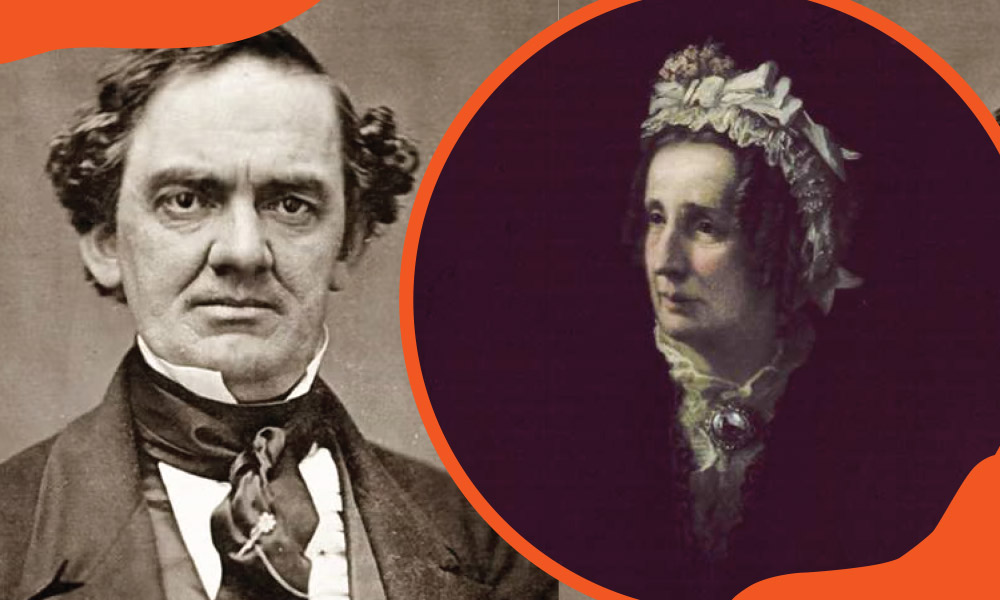
The Fires of 1865 and 1868: Remaining Steadfast
In 1865, disaster struck. The American Museum burned to the ground. It was a spectacular fire, visible for miles, and it destroyed not just a building but a lifetime of collecting. Barnum was devastated. He had put his soul into that museum, and now it was ash and smoke. Two years later, a second museum he had built also burned down. To an outsider, it looked like the end. Two catastrophic losses in three years would break most people.
Charity did not break. She was sad, certainly, because she understood what the museums meant to her husband. But she was also practical. She had lived through poverty before. She had sewn through the night to keep her family alive. A fire was just another obstacle. While Barnum wept over melted wax figures, Charity was already thinking about the next step. She did not lecture him or say “I told you so.” She simply stood beside him, steady as a rock, waiting for the storm to pass.
That steadfastness was Charity’s greatest gift to Barnum. She did not rescue him from failure. She simply refused to let failure destroy him. She provided the emotional floor upon which he could rebuild. And rebuild he did. Within a few years, Barnum launched his traveling circus, the “Greatest Show on Earth.” Charity did not travel with it. She stayed home in Bridgeport, Connecticut, in the house they called Lindencroft, keeping the home fires burning while her husband took his show on the road.
Later Years: Fading Quietly
By the late 1860s, Charity’s health was declining. The years of hard physical labor—the endless sewing, the childbearing, the stress of financial instability—had taken their toll. She suffered from heart problems and general weakness. She spent more time indoors, surrounded by her daughters and her memories. Barnum, now a famous man and even a mayor of Bridgeport, continued his whirlwind life. But he never abandoned her. His letters from the road are filled with inquiries about her health and instructions to the doctors.
Charity died on November 19, 1873. She was sixty-five years old. The cause was heart failure. Barnum was at her side, or nearby, as she passed. The man who had entertained millions of people around the world sat in silence while his wife of forty-four years took her last breath. All the crowds, all the applause, all the money—none of it could bring her back. Charity Hallett left the world the same way she had lived in it: quietly, without fanfare, and with a dignity that needed no audience.
Remarriage and Legacy
Less than a year after Charity’s death, Barnum remarried. His new wife was Nancy Fish, a British woman forty years his junior. To some historians, this seemed like a betrayal. But to others, it was simply Barnum being Barnum. He could not bear stillness. He needed energy and novelty. Nancy Fish was glamorous and young and loved the spotlight—everything Charity was not.
But Charity’s legacy is not diminished by Barnum’s choices. Her legacy lives in the fact that Barnum’s empire would not have existed without her. She was the tailoress who kept the family afloat during the starving years. She was the mother who raised the children alone when Barnum was chasing mermaids. She was the anchor that kept the ship from drifting into the rocks. Her net worth was modest by Barnum’s standards, but her contribution to his success was incalculable.
In recent years, popular culture has rediscovered Charity Hallett through films like The Greatest Showman. In that movie, she is played as a glamorous, singing romantic lead. The real Charity was less Hollywood and more heroism of the everyday sort. She was not a singer. She was a seamstress. She did not perform on a stage. She performed in a modest home with a needle in her hand.
Conclusion: A Legacy of Quiet Strength
Charity Hallett never sought fame. She never gave a speech to thousands or signed an autograph. But she did something arguably more difficult: she loved a difficult man, endured poverty without complaint, buried a child, and kept standing through every fire and failure. Her story is not flashy, but it is essential. It reminds us that behind every great public figure, there is often a private figure who made their greatness possible.
As Charity Hallett continues to be remembered—through biographies, films, and the enduring fascination with the Barnum name—her story stands as a reminder of how resilience, patience, and quiet purpose can shape a meaningful legacy. She did not build a circus. She built a family. She did not chase applause. She chased peace. And in the end, she left behind something more valuable than any curiosity or spectacle: an example of unwavering love and practical strength. That is the true greatest show on earth.